Historical Current
2009–December 2013
The Pioneer Economy
How people made Bitcoin usable, 2009–2013
Explore the history ↓Documents, experiments, unfinished possibilities.
Follow the narrative; open a document to look closer.
Bitcoin supplied a way to transfer value without a central issuer. Using it demanded other kinds of work: finding someone to trade with, agreeing on a price, protecting keys, delivering goods, paying expenses, and deciding whose promises to believe.
Between 2009 and 2013, people built an economy around those tasks. Its places of business included forum threads, exchanges, auction sites, mining pools, and a cashbox beside a computer. Its participants gave coins away, sold merchandise, pooled their work, financed machines, and entrusted savings to strangers. Some earned money. Others lost it or left.
The pioneer economy grew through these arrangements. Each made participation possible on particular terms. Each raised a new question about responsibility.
Movement I A Reason to Use It
01 / 2009
Before There Was a Market
A working network still needed reasons for people to acquire and use its money.
In July 2009, Satoshi Nakamoto put a practical problem to Martti Malmi: Bitcoin needed something people could use it for. Malmi's response considered an exchange that would buy and sell bitcoins for euros and other currencies. Convertibility, he argued, would help newcomers accept a money they could turn into something already familiar. [1]
Primary correspondence · Modern editorial presentation
A use for the network
July 21–22, 2009 · Satoshi Nakamoto and Martti Malmi
July 21, 2009 · Email #24
Satoshi Nakamoto
“We need an application to bootstrap it.”
Inspect Satoshi’s perspective
Editorial interpretation: a functioning transfer system still needed a use that would bring people to it.
July 22, 2009 · Email #25
Martti Malmi
“I've been thinking about a currency exchange service…”
Inspect Malmi’s perspective
Editorial interpretation: exchange into familiar currencies could give newcomers a reason to accept bitcoins.
Messages written in 2009; archive published by Malmi in 2024. The archive is incomplete. These are short transcriptions presented in modern cards, not original email screenshots.
Source and transcription details
Checked against emails #24 and #25 in Malmi’s primary archive. The second excerpt ends before the original sentence ends, indicated by an ellipsis. The archive preserves messages from Malmi’s university address; it is not a complete record of the correspondence.
Explore the conceptual connection
- Working networkTransfers were possible.
- Exchange proposalConversion offered another way to participate.
- Reason to acceptA use could make participation worthwhile.
Editorial interpretation, not a claim of historical inevitability.
The correspondence places exchange near the beginning of the experiment. A prospective user needed more than an explanation of how transactions worked. Someone had to supply coins, accept them back, or offer something worth buying.
Bitcoin's design addressed a different question: how a network could establish a transaction history without relying on a central institution to prevent double spending. That achievement did not recruit the other party to a trade or establish the price. [2]
Malmi's proposal connected these problems. A person who could exchange bitcoins for euros had a reason to consider accepting them before a large shopping economy existed. An exchange, in turn, needed customers willing to place orders and money available to meet them.
The economy would have to be assembled around a network that could already move its coins.
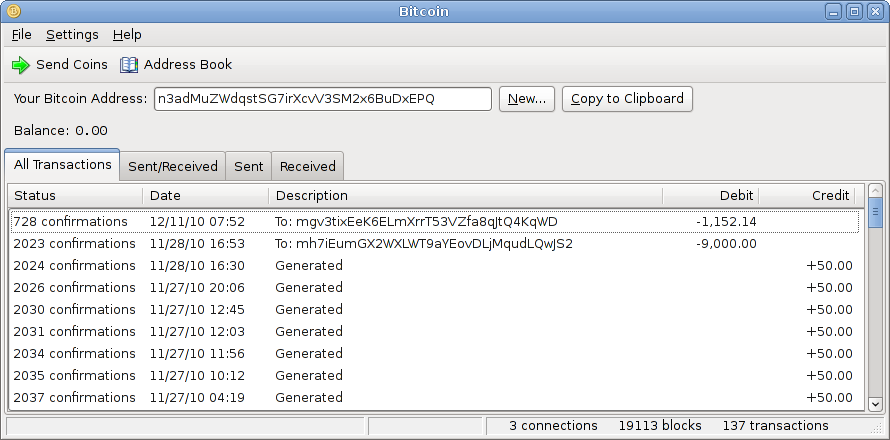
Historical software · Later context
Bitcoin 0.3.19 running on testnet under Linux/GNOME; image uploaded December 16, 2010. This is later software context, not a screenshot of the July 2009 correspondence or a main-network transfer.
Image source, credit and license
MagicalTux · Original file and source · CC0 1.0

None. Original PNG; scaled for display without cropping.
02 / 2009–2010
Naming a Price
A posted value became useful when someone would trade at it.
On March 17, 2010, the operator of BitcoinMarket reported a modest beginning: nine people had registered, three others had deposited funds, and the operator's own deposit brought the participating group to four. The service had apparently made its first real trade around noon. [3]
The account called dwdollar had announced work on the exchange in January. Building a market involved addresses, connections, order handling, and finding people prepared to use the service. A working page and a population of traders were separate accomplishments. [4]
Later that month, SmokeTooMuch offered 10,000 BTC at auction with a $50 starting bid. Replies offered less. On April 7, the seller reported that the auction had ended without a qualifying bid or a transfer. [5]
Contemporary participant accounts · Evidence strip
An asking price still needed a buyer
- January–March 2010
Opening a market
dwdollar announced the exchange, then reported its early trading activity on March 17.
- March 30, 2010
Asking terms
SmokeTooMuch offered 10,000 BTC with a $50 starting bid. Replies offered $20 and $25.
- April 7, 2010
Reported outcome
The seller said there was no qualifying bid and no transfer.
A proposed split, not a completed sale
The seller proposed sending 5,000 BTC before receiving payment through PayPal and delivering the remaining 5,000 BTC afterward. The proposed split tried to manage trust between strangers; it did not produce a completed sale. This account comes from dated participant posts, not an executed trading ledger.
Different accounts, not a price series: an operator’s reported trade and a seller’s unsuccessful auction do not establish a general market price.
The unsuccessful sale is as revealing as an executed trade. People could disagree about value, quantity, and terms. A quoted rate did not guarantee that a seller could dispose of a particular holding at that price. A lower offer demonstrated some demand without satisfying the person selling.
An exchange gave these disagreements a place to meet. Buyers could state what they would pay; sellers could state what they required. A trade occurred where the terms matched. Until then, the apparent value of a balance depended partly on finding the next person willing to take it.
This was the work behind an emerging price: arranging an actual exchange between people with different expectations.
03 / 2010 onward
The Forum Economy
A public meeting place helped strangers find information, goods, services, and one another.
Much of this work happened in the forum now known as BitcoinTalk. A thread could begin as an advertisement and become a negotiation, a help desk, or an argument about whether the service should be trusted. Readers could watch operators explain decisions and customers challenge them.
Outside attention became part of that shared activity. In November 2010, Jeff Garzik began collecting press references in a forum thread. Stephen Gornick's April 2011 roundup placed coverage alongside payment services, merchant initiatives, regional projects, IRC channels, and work on multilingual resources. [6] [7]
The forum was central to this public life, connected to other places where people worked and talked. IRC offered live conversation. Wikis collected information. Mailing lists and correspondence carried technical discussion. Participants moved between these spaces rather than inhabiting one complete institution.
Trading arrangements also developed across them. In October 2010, nanotube announced an IRC marketplace, bitcoin-otc. A later announcement introduced a web of trust, and discussion addressed optional PGP identity verification. [8]
An order book helped someone find a trade. Reputation addressed another problem: whether the counterparty would perform. Neither a pseudonym nor a cryptographic identity established that a person was honest, but continuity made previous conduct easier to connect to the next transaction.
Recruiting users required coins to try. In June 2010, Gavin Andresen announced a faucet offering five bitcoins per customer. The discussion soon addressed donations, abuse, and access through Tor. Even a giveaway needed funding and operating decisions about whom to let in. [9]
Editorial function map · Not measured relationships
A meeting place, with many jobs
- IRCLive conversation; bitcoin-otc brought traders together.
- Wikis & mailing listsCollected information and technical discussion.
- Trust signalsContinuity and optional PGP identity verification; not proof of honesty.
- A faucetCoins for newcomers to try, with funding and access decisions.
The giveaway needed operating rules
The initial giveaway was an experiment in recruiting users. Subsequent discussion addressed funding, repeated claims and steps to control abuse. Even a free service needed operating rules.
These are conceptual functions across communicating spaces, not formal institutional relationships. Press collections show coordination, not verification of every linked activity.
These conversations were part of the economic machinery. People used them to attract customers, make commitments, judge one another, and respond when arrangements failed. For a newcomer, learning to use Bitcoin could also mean learning whom to ask.
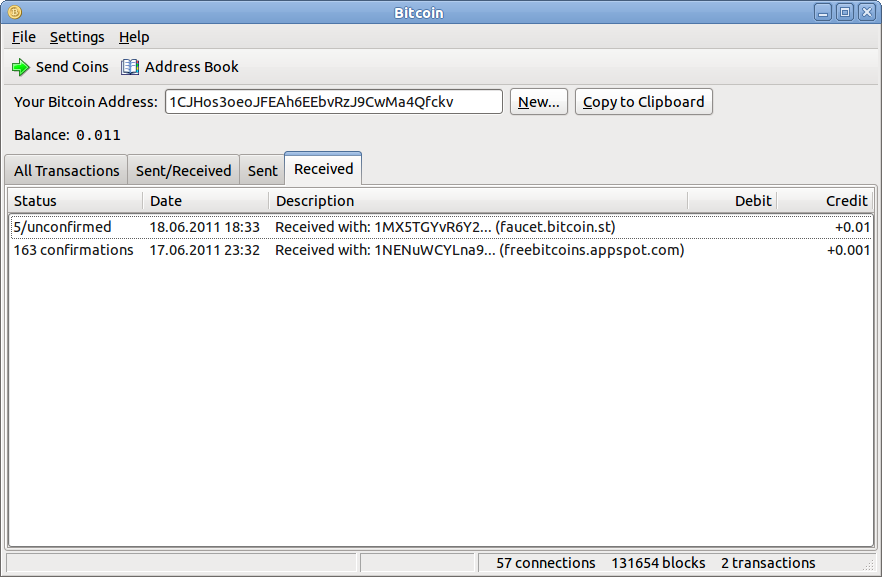
Historical software · Later context
Bitcoin client screenshot uploaded June 18, 2011, showing a received transaction labeled freebitcoins.appspot.com from June 17. The screenshot documents later faucet-related activity; it is not an image of Andresen's June 2010 five-BTC offer or the faucet website.
Image source, credit and license
Philipp Psurek · Original file and source · CC BY-SA 3.0

None. Original PNG; scaled for display without cropping.
Movement II Making It Usable
04 / 2010–2011
Earning Coins
Mining offered an income whose timing and costs were difficult to predict.
In December 2010, a user named todu asked whether something was wrong. The Bitcoin application had run on a Windows laptop for 708 hours without generating coins. Replies discussed the limitations of the equipment and the cost of keeping it working. [10]
The question exposed a gap between a computer performing work and its owner receiving a reward. Mining was a competition. A machine could participate for a long time without finding a block, while electricity and time continued to be spent.
Tools that changed the competition had an economy of their own. In September, puddinpop credited a contribution from jgarzik with enabling the release of CUDA mining source code. Funding helped make a productive tool available to other users. [11]
Participant account + editorial process comparison
Work performed. Reward uncertain.
todu’s reported laptop operation without generating coins · December 10, 2010. One participant’s experience, not a benchmark.
December 12, 2010 · The participant’s outcome
On December 12, 2010, todu reported about 1,400 kilohashes per second and said the costs of dedicated graphics hardware made continued mining unattractive. The participant stepped away from mining for the time being, but remained open to using Bitcoin.
Mining alone
One participant works toward finding a block; operating time alone does not ensure a reward.
Contributing to a pool
Contributors combine work and share rewards under the pool’s arrangements. Measurement and distribution introduce dependencies.
- Computing workEquipment and electricity
- An uncertain rewardFinding a block is not assured for an individual
- DistributionSolo receipt or the pool’s arrangements
Pooling changes the distribution of waiting. It does not make electricity free, guarantee income, or establish profitability.
Pooling offered another approach. In a November discussion, Slush described the frustration of trying to find a block with three CPUs and proposed cooperative mining. Combining work and sharing rewards offered participants a way to receive smaller payments more regularly. [12]
Pooling changed the distribution of waiting. It did not make an inefficient machine consume less electricity or guarantee a profit. It also introduced questions about measuring contributions, distributing rewards, and relying on the pool's arrangements.
Mining was becoming a livelihood calculation. What equipment could someone afford? How much did power cost? How long could they wait? And after receiving bitcoins, what could they do with them?
05 / 2010–2011
Something to Buy
Goods gave coins a purpose, but buying them required more than a payment address.
The early shopping economy included the unfinished work of marketplaces. In July 2010, BiddingPond's auction-site discussion moved from an announcement to questions about bids, shipping, bugs, and how the operator would earn money. Building somewhere to list goods was only part of arranging a sale. [13]
Alpaca socks gave this world a memorable product. A later account described David Forster buying socks from his parents' farm for dollars and reselling them for bitcoins. It offered a way to participate through merchandise rather than mining. [14]
A June 2011 forum promotion discussed the sock offer and international shipping; its operator reported that the deal sold out. Customers and organizers were working through ordinary retail questions in public. [15]
In August, DrHaribo supplied the customer's perspective. He said he had bought alpaca socks the previous week and wanted to try buying beef jerky. Arranging purchases by email frustrated him. He asked whether merchants had a payment processor and shopping-cart solution. [16]
Modern typographic illustration · Not an original receipt
A purchase was more than a payment
socks
- Ordering
- Contacting a seller
- Fulfillment
- Shipping a physical product
- Checkout
- Making the purchase easier
Two sides of the order
Merchant-side summary: the June 2011 promotion discussed international shipping; the operator reported a sellout.
Buyer account · August 10, 2011
A customer reported buying alpaca socks the previous week, then wanting to purchase another product. Arranging purchases by email made the transaction cumbersome. A working currency did not yet mean an ordinary checkout.
These are summaries, not invented dialogue. The account of Forster’s supply arrangement comes from later reporting in May 2013. Neither a listing nor a promotion independently establishes delivery.
The complaint moved the story beyond the novelty of what could be bought. A buyer needed to find a seller, understand the offer, make contact, and complete an order. Enthusiasm could motivate someone to tolerate that work. It could also make the inconvenience more obvious.
The socks could be worn. The next challenge was making the purchase feel ordinary.
06 / 2010–2012
The Way In and Out
People using a new currency still needed connections to familiar payment systems.
A service could accept bitcoins and still depend on a bank or payment company for the other side of its business. The network's availability did not ensure that an exchange could deliver dollars to a customer.
In October 2010, Mt. Gox's operator reported that PayPal had dropped its account following chargebacks and frozen funds. Users asked about withdrawals; the operator described efforts to provide another route. [17]
CoinPal experienced a similar vulnerability. On April 30, 2011, its operator, mndrix, reported that PayPal had frozen his account and that the service could not continue as before. Replies described cash-out needs, an unsettled order, and searches for alternatives. The operator's explanation preserved his account of the dispute; the customers' questions showed the immediate practical consequences. [18]
By February 2012, TradeHill was announcing a suspension of trading and deposits. Jered Kenna cited licensing requirements, bank-account closures, Paxum's departure, and a dispute with another payment processor. He said client funds would be returned. [19]
Each episode exposed several layers of a transaction. A trade changed balances inside a service. Withdrawing bitcoins required that service to send them. Receiving conventional money required access to another institution's payment system. Difficulties at one layer could interrupt the customer's plan even while Bitcoin continued producing blocks.
Editorial explanatory diagram · Operator accounts
Three operational layers
- Bitcoin exchange / serviceRecords trades and sends withdrawals
- Payment or banking providerConnects the service to conventional money
- User seeking a payoutDepends on the conventional-money route
- October 10, 2010
Mt. Gox
Operator reported PayPal restrictions and frozen funds.
- April 30, 2011
CoinPal
Operator reported a frozen PayPal account.
- February 13, 2012
TradeHill
Operator announced suspension and an intention to return funds.
A trade recorded by a service, a Bitcoin withdrawal, and a conventional-money payout are different operations. These operators’ accounts are not independent adjudications or proof of complete repayment.
For someone paying household bills or buying equipment, the exit route mattered as much as the entrance. A new monetary network still had to connect to the money other people required.
07 / 2011–2013
Silk Road: An Underground Bitcoin Economy
A large illicit marketplace made Bitcoin useful at scale—and exposed the institutions and harms beyond a payment.
In the early Bitcoin economy, a buyer might have to search a forum thread, contact a merchant, or arrange a trade with a stranger. Silk Road brought many of those separate steps together. Operating through the Tor network from 2011 until its October 2013 shutdown, it offered a recognizable marketplace: product listings, vendors, customer feedback, a payment system, and a mechanism for resolving disputes. Its principal trade was illegal drugs. Bitcoin was the currency used to pay for them. [20] [58]
That combination made Silk Road more consequential to Bitcoin's early commercial history than an isolated demonstration that someone could buy an unusual item. A purchaser needed a way to obtain bitcoins; a seller needed somewhere to advertise and a means of being paid; the marketplace needed enough customers and sellers to make each side's participation worthwhile. Silk Road assembled those relationships inside a service that people returned to use. The illegal nature of the trade was central to its appeal and its consequences, not an incidental feature of an otherwise ordinary shop. [20] [58]
A market takes shape
Silk Road's storefront was accessed through Tor, which helped conceal network locations. That was different from Bitcoin's role. Bitcoin supplied the payment currency; it did not provide the listings, screen for sellers, settle disputes about parcels, or determine whether a promised delivery had arrived. Those tasks belonged to the marketplace and its participants. [20] [58]
The service combined features familiar from other online markets with arrangements adapted to its users' desire for anonymity. Seller reputation and customer feedback allowed earlier interactions to inform later purchasing decisions. Escrow meant that coins could be held within the marketplace's system while a transaction awaited completion. The operator collected a commission for facilitating commerce. These arrangements helped strangers transact, but they also concentrated control over balances, information, and disputes in the hands of a central operator. [20] [58]
A successful Bitcoin transfer was not the same as a successful purchase. Buyers still depended on sellers to send the goods described; sellers depended on marketplace rules and access to their funds; both sides depended on the continued operation of the website. Silk Road made this supporting commercial machinery unusually visible because it could not rely on the ordinary legal remedies of conventional retail trade.
EDITORIAL RECONSTRUCTION · 2011–2013
An economy built around Bitcoin payments
A way into the market
Acquires bitcoins and selects an offer.
A centralized point of dependence
- Listings & reputation
- Hosts listings and records feedback.
- Escrow & disputes
- Controls escrow and manages disputes.
- Operator commission
- The marketplace earns revenue from intermediating transactions.
An offer to fulfill
Offers goods and depends on payment release and delivery arrangements.
Payment did not remove reliance on the marketplace or guarantee delivery.
An explanatory model of marketplace roles, not a reconstruction of a particular transaction. The principal commerce involved illicit narcotics.
What observers could measure
Nicolas Christin studied Silk Road through publicly observable listings collected from late 2011 into 2012. His analysis covered more than 24,400 distinct items and found that controlled substances and narcotics dominated the available goods. The market was not a fixed collection of established merchants: many listings and sellers disappeared after comparatively short intervals, while a core of 112 sellers remained present throughout the study's measurement period. [20]
From observed listings and assumptions explained in the study, Christin estimated seller revenue at slightly more than $1.2 million per month, with approximately $92,000 per month flowing to the marketplace operator as commissions. These were estimates for an observed period, not a ledger of every completed sale or a lifetime total. They nevertheless documented sustained commercial activity on a scale quite different from the tentative forum auctions and small shops that had preceded it. [20]
Later investigators obtained a different kind of evidence. In a 2022 sworn affidavit drawing on recovered Silk Road server records and court material, an IRS-CI agent reported approximately 1.5 million marketplace transactions involving roughly 9.9 million BTC between February 2011 and October 2013. Those are retrospective, full-period forensic figures; they should not be read back into what a 2012 observer could have known. Nor do they establish Silk Road's share of all Bitcoin commerce. [59]
Two evidence bases · Different methods and time spans
What could be measured—and when
Contemporary observation
Late 2011–2012
Nicolas Christin’s research · WWW 2013
Observational estimates, not an audited record of every completed purchase.
- 24,400+
- Distinct item listings examined
- Approximately $1.2 million per month
- Estimated seller revenue
- Approximately $92,000 per month
- Estimated operator commissions
- 112 sellers
- Continuously present during the measured interval
Later forensic reconstruction
February 2011–October 2013
Reported in the 2022 IRS-CI affidavit
Retrospective figures based on recovered records and later investigation.
- Approximately 1.5 million
- Marketplace transactions
- Approximately 9.9 million BTC
- Reported cumulative transaction volume
- Approximately 640,000 BTC
- Reported operator commissions
Different methods and time spans. These figures cannot be combined into a single growth series, treated as all Bitcoin commerce, or converted to a 2013-dollar total using one Bitcoin price.
Who held the trust?
The marketplace depended on Bitcoin, yet much of the trust surrounding a purchase was entrusted to people and an organization rather than to the network. Escrow required the operator to control funds within the service. Feedback required records that buyers believed and sellers could accumulate. Disputes required decisions. The reputation of a seller, the solvency or honesty of the operator, and the delivery of a parcel were not questions that a blockchain could answer.
This had a counterpart in the lawful early economy. A BiddingPond listing, an emailed order for alpaca socks, and a hosted Bitcoin balance all required arrangements beyond sending coins. Silk Road organized comparable commercial responsibilities on a far larger illicit stage. The parallel explains a problem of market design; it does not make the businesses or their consequences morally equivalent. [13] [15] [16]
A growing economy meets the law
Silk Road brought harms that no account of early Bitcoin adoption should treat as background. Its principal trade was illicit narcotics. Vendors used the marketplace to sell drugs, and its design sought to shield participants from identification and law enforcement. The resulting activity drew criminal investigations and shaped the public association between Bitcoin and illegal commerce. [20] [58]
Ross Ulbricht, whom U.S. authorities identified as the site's creator and operator, was arrested in San Francisco on October 1, 2013. The original Silk Road site was taken down in early October. Investigators seized servers, transaction records, and bitcoins connected to the operation. A payment network capable of continuing without Silk Road did not keep this particular marketplace, its custody arrangements, or its records beyond the reach of investigators. [50] [60]
Authentic historical notice · October 2, 2013
The Marketplace Is Seized
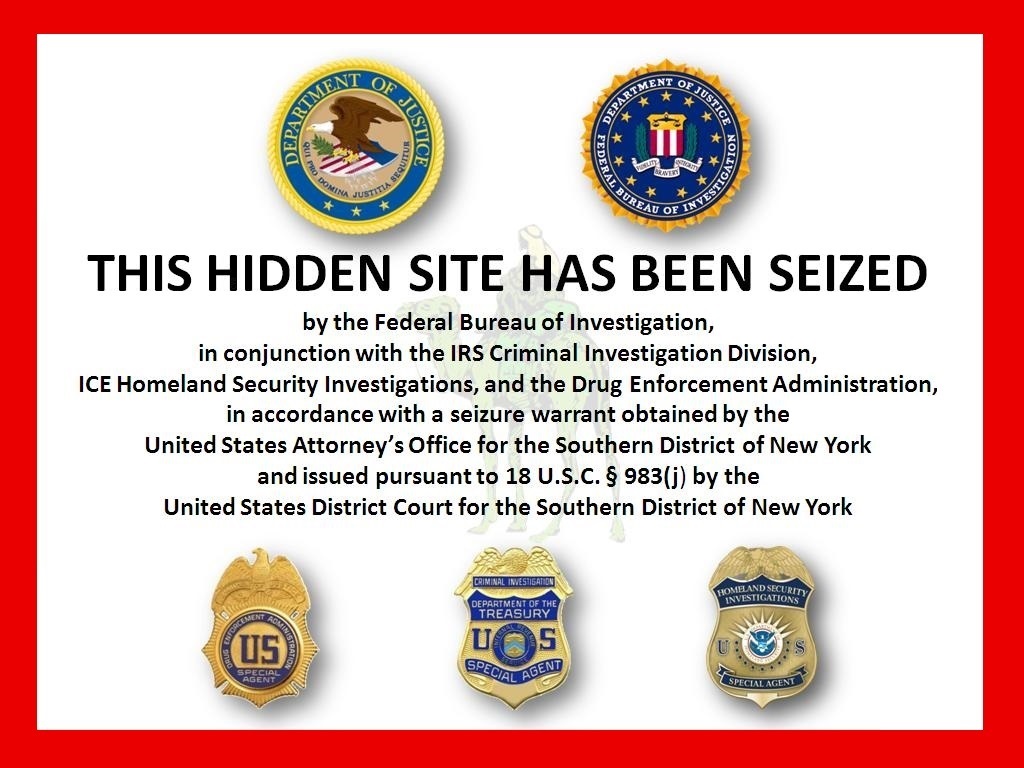
Notice displayed following the October 2013 seizure of the original Silk Road marketplace. The marketplace could be shut down even though Bitcoin's underlying network continued operating.
Inspect the original image ↗Image source, credit and license
Federal Bureau of Investigation · Original Commons record · U.S. federal government public domain


None. Original JPEG, resized for display without cropping.
Commons upload: 2013-10-02.
Documentary chronology · Contemporary account and later testimony
A marketplace could be taken down
- 2011
The market begins
The original Silk Road begins operating.
- October 1, 2013
Arrest
Ross Ulbricht is arrested in San Francisco.
- October 2, 2013
Takedown
The website is taken down and servers are seized during the investigation.
Read the chronology’s source boundaries
The contemporary DOJ account describes the arrest and seizures; the later sworn declaration describes the October 2 takedown. Distinguish prosecution allegations from descriptions of completed investigative acts. These actions did not reverse historical Bitcoin transactions.
The Bitcoin network continued; the specific marketplace, its escrow relationships, and its records depended on an identifiable service and its operators.
The shutdown did not erase the significance of the commerce that had occurred. It showed how much an early Bitcoin economy could organize around one central service—and how much depended on the people controlling that service. Silk Road had given Bitcoin a persistent commercial use while exposing the risks, illegal purposes, and enforcement consequences of the institutions built around it. The currency's payment rules alone had settled none of those questions.
Movement III The Cost of Trust
08 / 2011–2012
Who Held the Coins?
Convenience changed who could lose money and who could help recover it.
On June 13, 2011, the account allinvain reported a loss of 25,000 BTC and described a compromised computer. The thread records the owner's distress and efforts to understand what had happened. It also exposed a hard limit of backups: restoring an old wallet could not reverse coins already spent by someone else. [21]
Holding keys placed an important form of control with the user. It also placed security work there. Software, storage, backups, and access to the machine became part of protecting money.
A hosted wallet moved some of that work elsewhere. The balance on its website represented a relationship with the operator, who controlled the service and its ability to send coins. MyBitcoin's customers confronted this dependence in the summer of 2011. Forum discussions disputed recovery and the proposed partial refund. [22]
Editorial comparison · Participant testimony
Who can act on the coins?
User holds keys
- Signing control
- The user’s keys
- Operation
- The user’s software and storage
- Backup
- Can restore key access, not undo an already completed spend
Hosted service controls keys
- Signing control
- The service’s keys
- Operation
- The service operator
- Withdrawal
- Requires the service to cooperate and remain able to send
Read the testimony boundaries
allinvain reported a loss; MyBitcoin recovery and refund accounts were disputed. One departing user’s account does not establish how many others left. The Mt. Gox accounts conflict and concern exchange records, not a reversal of Bitcoin’s blockchain.
Neither arrangement guarantees safety or recovery. These mechanisms do not independently reconstruct the reported incidents.
On August 19, 7iain7 said losses through two MyBitcoin accounts had led him to leave Bitcoin and sell his mining graphics cards. The post cannot tell us how many others left. It preserves one person's account of deciding that participation was over. [23]
An exchange balance had its own complications. After the June 2011 Mt. Gox disruption, a customer and the operator published conflicting accounts of extraordinary trades and their treatment. Their dispute concerned the exchange's records and obligations; reversing entries in those records was different from reversing Bitcoin's blockchain. [24]
The choices were consequential. A user could take on the burden of keeping keys or depend on someone offering to manage it. Neither arrangement removed the possibility of loss. The people who departed belong in the history of the economy as much as those who continued building it.
09 / 2011–2013
Promises of a Return
A payment could be verified while the business behind a promised return remained opaque.
Bitcoin Savings and Trust offered a reason to hand coins over rather than keep them idle. Its operator used the name pirateat40 and described profitable Bitcoin dealings. The SEC's later complaint reconstructed forum solicitations, questions about the business, and assurances of limited risk. Promised returns reached seven percent a week. [25]
The offer asked investors to believe something beyond the network's records. A transfer could show that an address had received bitcoins. It could not establish the operator's customers, trading profits, liabilities, or ability to meet future withdrawals.
On July 23, 2013, the SEC charged Trendon Shavers and Bitcoin Savings and Trust with operating a Ponzi scheme. The agency alleged that new investments funded purported returns and that coins were diverted for personal use. [26]
SEC records · Allegations and later findings distinguished
A payment is not a business audit
The operator’s promise
The SEC complaint described promised returns reaching seven percent a week and assurances about the business. Those claims were attributed to the operator.
What a payment can demonstrate
A transfer can show that coins reached an address. It cannot establish trading profits, liabilities, customers, or the capacity to meet withdrawals.
- July 23, 2013
Allegation stage
The SEC charged Shavers and BTCST with operating a Ponzi scheme.
- September 2014
Later judgment
A later judgment established the scheme; that finding is separate from what participants knew earlier.
Read these columns as an evidence distinction, not an offer or an investment projection. The manuscript’s evidence note below preserves the later-finding boundary.
The case joined an unfamiliar payment technology to a familiar financial problem. High returns and accounts of previous payments did not explain where continuing profits came from. Paying an earlier participant could strengthen confidence while leaving that question unanswered.
These distinctions matter when looking back at the forum. It held questions and objections as well as solicitations. Its capacity to make a promise visible did not make that promise true. The same place that helped strangers find one another could carry claims they lacked the means to verify.
10 / 2011–2013
Keeping a Common System
Shared software and public representation required people to coordinate and disagree.
Organizations also faced decisions about what participation implied. In June 2011, EFF explained why it was stopping Bitcoin donations, citing legal uncertainty, questions about using the funds, and concern that acceptance could be mistaken for endorsement. A recognizable name could open a door and later close it. [28]
In September 2012, Gavin Andresen announced the Bitcoin Foundation. He described an organization modeled on the Linux Foundation and invited members to help shape its work. Replies welcomed the effort and questioned whether it would concentrate influence. Public representation was becoming organized, and its authority was immediately contested. [29]
Maintaining compatible software posed another kind of coordination problem. Version 0.8.0 was released in February 2013. On March 11, differences in how versions handled a block produced competing chains. [30] [31]
The post-mortem records a response involving developers, pool operators, exchanges, and a payment processor. BTC Guild and Slush changed their mining software to help restore a common chain. The choice sacrificed work their pools had performed on the competing branch. Services suspended affected payment or deposit functions while the incident was resolved. [31]
BIP 50 · Editorial explanation of a technical record
A Network Reaches an Agreement
Different software versions disagree about a block.
Bitcoin 0.8 branch
Accepts the block.
Pre-0.8 branch
Rejects the block.
The competing branches persist.
- Pool operators take coordinated action.BTCGuild and Slush downgrade their nodes.
- Services suspend and restore affected operations.Exchanges and payment services respond to the disruption.
The network converges on a common history.
Open the source record · BIP 50
Gavin Andresen · March 2013 Chain Fork Post-Mortem · Public-domain document.
Read the technical post-mortem ↗Conceptual stages, not a minute-by-minute reconstruction or a vote of all users. The Bitcoin Foundation did not centrally order this response.
Gavin Andresen's post-mortem documents how developers, mining pools, exchanges, and payment services responded to the March 2013 chain fork. Technical compatibility had immediate economic consequences.
The response made the economic stakes of software compatibility visible. A merchant needed confidence about a payment. An exchange needed a dependable deposit history. Miners had invested work in blocks whose treatment now mattered to their income.
An organization could raise funds or speak in public. It could not settle those technical and economic questions simply by claiming to represent Bitcoin. Resolution depended on specific actors taking actions that other participants could recognize and follow.
The system's operation included this work of maintenance: identifying trouble, reaching people who could respond, and restoring the conditions under which everyone else could transact.
Movement IV Building Beyond the Hobby
11 / 2012–2013
Financing the Next Machine
Participants raised capital through claims on businesses outside the blockchain.
In August 2012, the ASICMINER discussion offered a different way to participate in mining. Instead of buying a machine, investors could acquire shares associated with a venture developing specialized equipment. Shares were offered through GLBSE, an early Bitcoin securities venue. [32]
The replies read like a small capital market taking shape. Participants asked about schedules, ownership, discounts for large purchasers, and what would happen to unsold shares. The issuer answered questions about trust by invoking previous activity and identity checks. [32]
The proposed relationship extended beyond the purchase transaction. A holder depended on people developing and operating equipment, accounting for costs, maintaining ownership records, and making distributions. The blockchain could carry a payment without independently establishing those obligations or ensuring their fulfillment.
GLBSE's closure later that year exposed the importance of the records. Contemporary reproductions of its notices distinguished users' bitcoin balances from their continuing relationships with asset issuers. Claims instructions asked for information that could reconnect holders and the businesses behind their assets. [33]
Annotated financial document · Modern editorial presentation
Buying a Claim on Future Mining
ASICMINER · GLBSE · Offering discussion and claims notices
- Investor
- Supplies bitcoins in return for a claim on a mining venture.
- Issuer
- Undertakes to develop and operate equipment and account for the venture.
- Trading venue
- Helps participants acquire or transfer interests and maintain records.
A Bitcoin payment could establish that coins had moved. It could not independently establish ownership rights, future production, or promised distributions.
Read the offering and recordkeeping qualifications
The opening forum post was edited later. It is not presented here as an untouched 2012 document. GLBSE’s closure did not itself resolve investors’ rights against issuers; the surviving discussion and reproduced claims notices are not a complete outcome audit.
Read the ASICMINER discussion ↗An annotation of responsibilities, not an original share certificate or a statement that every promise was fulfilled.
A trading venue could close while an underlying business still existed. Conversely, recovering a bitcoin balance did not automatically settle an investor's rights in a venture. Several responsibilities had been combined in one service and now had to be separated.
This activity expanded the meaning of Bitcoin commerce. People were using coins to finance hoped-for production and trading claims on its future results. Assessing those claims required knowledge of businesses, people, and records that could not be read from a transaction alone.
12 / 2012–2013
Waiting for Delivery
Specialized equipment made supplier reliability and timing part of the mining calculation.
The economics of a mining machine began before it arrived. A customer paid for an expected capability and waited while the conditions under which it would earn coins could change.
In June 2012, Butterfly Labs preorder discussions argued over delivery targets and quoted refund terms. Participants also considered the advantage early recipients would enjoy before competing machines increased the difficulty of earning rewards. A promised specification could not answer when someone would actually begin mining. [34]
A January 2013 forum guide compared advertised hardware and warned that ASIC equipment was not yet shipping. Its confident predictions are evidence of expectations, rather than a dependable account of what every purchaser would earn. [35]
On January 20, Avalon announced shipments. A February discussion seeking receipt reports also preserved customers' uncertainty about tracking and arrival. Shipment, delivery, and useful operation were separate stages in the investment. [36] [37]
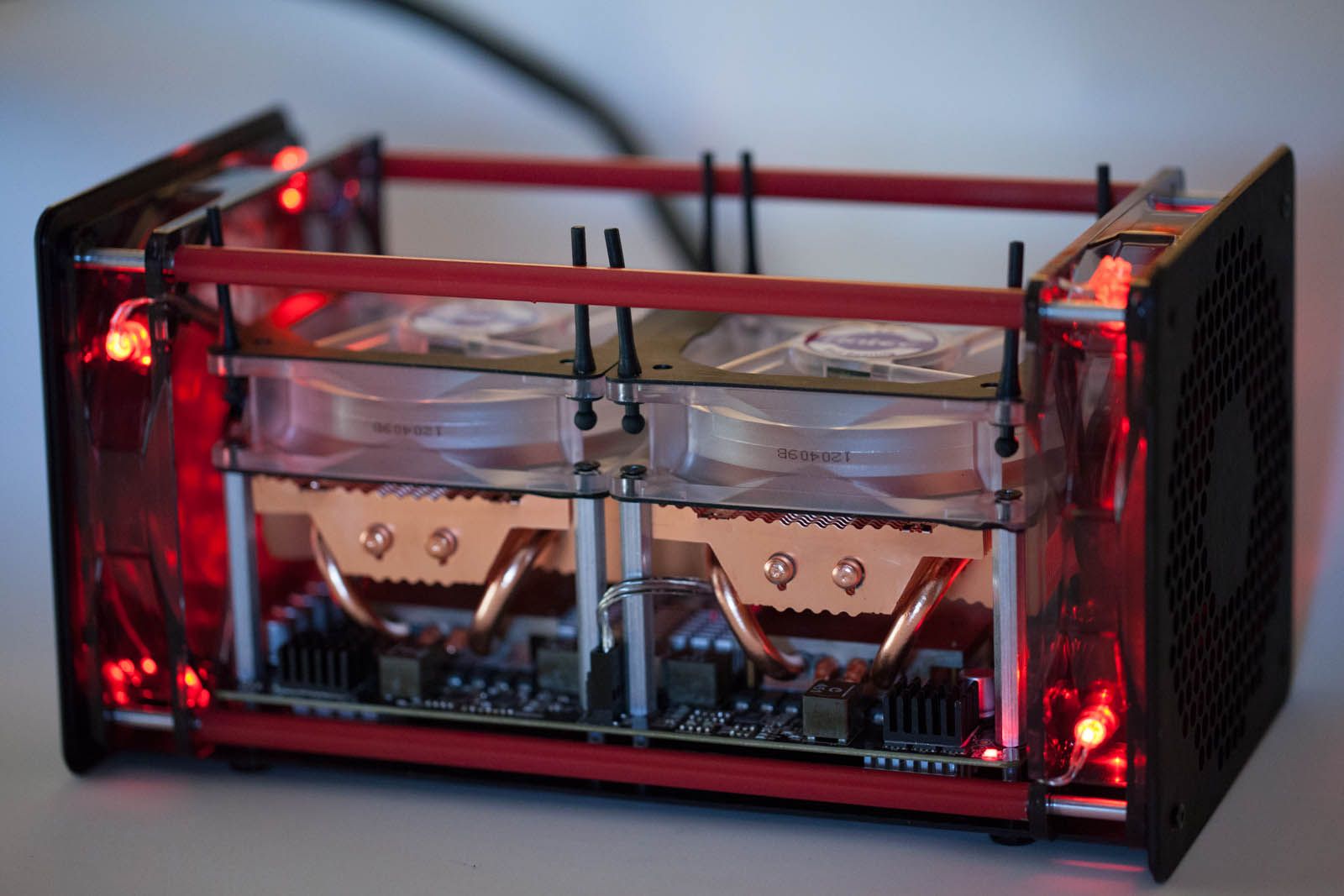
Authentic historical photograph · Documented in 2013; uploaded September 14, 2013
Mining Moves Beyond the Desktop
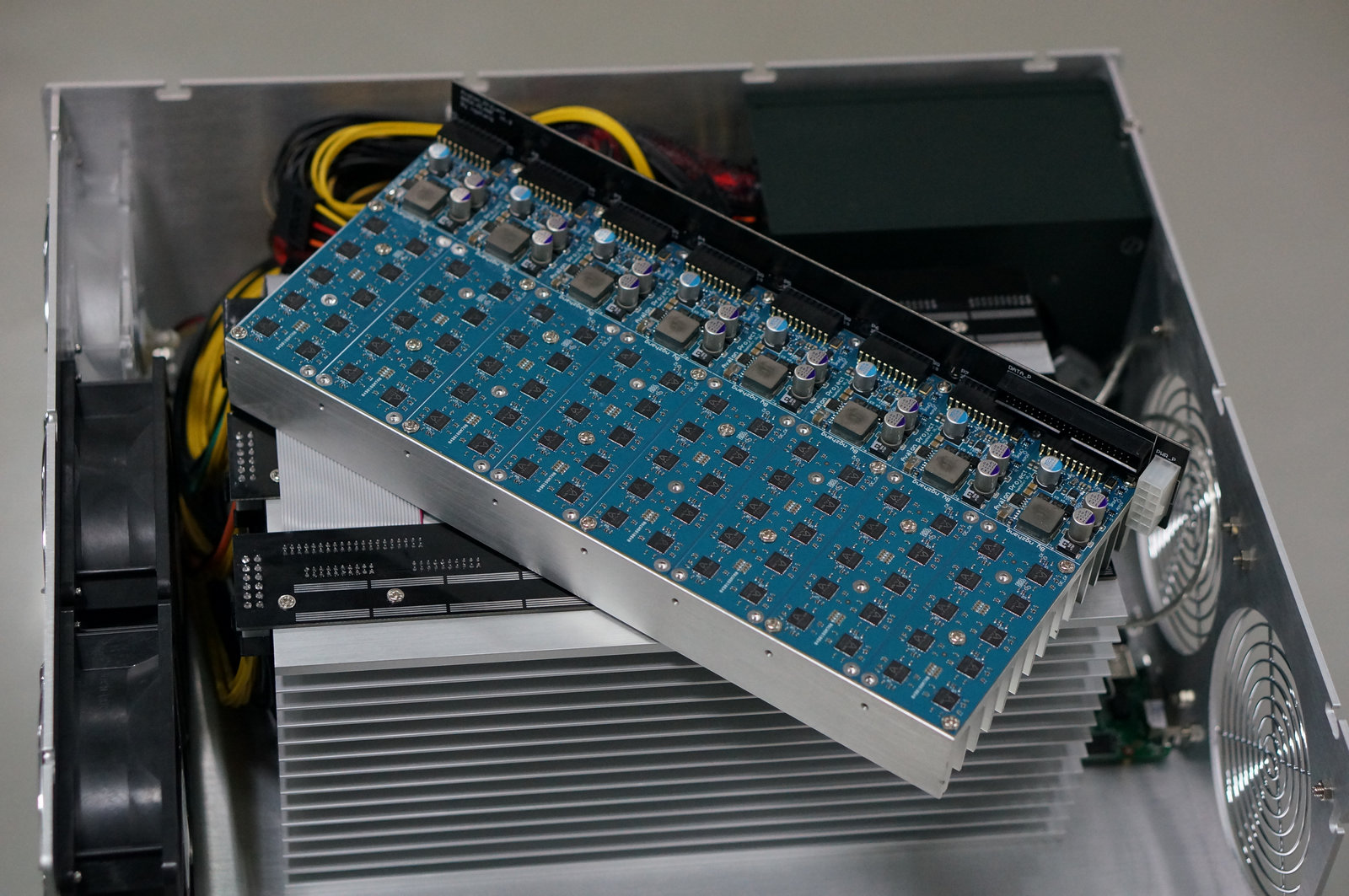
An early Avalon ASIC-based Bitcoin mining machine, documented in 2013. Specialized equipment helped transform mining from an activity conducted on ordinary computers into a competition shaped by hardware investment, electricity costs, and delivery schedules.
Inspect the original image ↗Image source, credit and license
Zhang Nangeng (张楠赓) · Original Commons record · CC0 1.0

None. Original JPEG, resized for display without cropping.
Commons upload: 2013-09-14.
The record establishes documentation in 2013, not the exact photographic date, first shipment, ownership or fulfillment of a particular preorder.
Authentic historical photograph · June 12, 2013 · Commons upload October 18, 2014
A Customized Butterfly Labs Single SC
A customized 60 GH/s Single SC, dated June 12, 2013 by the Commons record; uploaded there October 18, 2014. This photograph does not establish fulfillment of any particular customer’s preorder.
Inspect the original image ↗Image source, credit and license
Joshua Zerlan · Original Commons record · CC BY-SA 3.0

None. Original JPEG, resized for display without cropping.
Commons upload: 2014-10-18.
Contemporary announcements and participant reports
A specification was not a delivered machine
- June 24, 2012
Preorder expectations
Butterfly Labs discussion preserved quoted terms and disputed delivery expectations.
- January 16, 2013
Advertised capability
A forum guide discussed hardware expectations, not verified future earnings.
- January 20, 2013
Shipment announcement
Avalon announced shipments.
- February 2013
Receipt reports
Participants discussed arrival and tracking uncertainty.
Advertised hardware → preorder → shipment → reported delivery → useful operation
Editorial distinction between stages; not a verified fulfillment record for every purchaser.
Separate context: subsidy and pool choices
Participants marked the November 28, 2012 halving from 50 BTC to 25 BTC. Earlier P2Pool discussions proposed support for distributed mining. Neither establishes a particular buyer’s profitability or a measured effect on concentration.
Shipment, receipt and useful operation are different claims. No delivery totals, performance chart or estimated return is inferred here.
The subsidy was changing too. In November 2012, participants celebrated the first halving, when the block subsidy fell from 50 BTC to 25. The smaller subsidy entered a calculation already shaped by competition, power, and equipment costs. [38]
Some people tried to influence the organization of mining itself. A January 2012 thread offered voluntary subsidies to P2Pool miners, encouraging participation in a distributed alternative to conventional pools. Offers of support met practical questions and a preference, from one respondent, for an already familiar pool. [39]
These were choices about where work would go and who would bear uncertainty. Hardware buyers considered speed and delivery. Pool participants considered rewards, familiarity, and control. The equipment race and the effort to distribute mining differently were both part of the pioneer economy.
13 / 2012–2013
Bitcoin at Checkout
Processors helped merchants accept a new payment while continuing to operate in dollars.
The checkout problem DrHaribo had described in 2011 was receiving practical answers. BitPay's September announcement of a mobile checkout pilot showed work on making a purchase easier for merchants and customers. [40]
WordPress gave a fuller account when it added Bitcoin payments in November 2012. It described conventional payment restrictions as an obstacle to bloggers buying upgrades. Bitcoin offered another route. BitPay would receive the bitcoins and send WordPress dollars. [41]
The announcement also addressed the details of selling: some purchases were excluded, digital upgrades could be provided before a blockchain confirmation, and refunds would remain available through the processor. These were operating choices about customer experience and risk. [41]
In February 2013, Reddit added Bitcoin support for Reddit Gold. Yishan's explanation in the announcement discussion was direct: the company accounted in dollars, paid expenses in dollars, and used Coinbase to convert the payments. He also described the technology as experimental and reserved the possibility of changing the implementation. [42]
Editorial settlement pathway · Individually dated examples
The Merchant Wants Dollars
- Customer pays BTCChooses Bitcoin for an eligible upgrade
- BitPay processes paymentHandles conversion
- WordPress receives USDDoes not need to hold the bitcoins
WordPress · November 15, 2012
Pay Another Way: Bitcoin
Modern interpretation of the announcement, not an original checkout screenshot.
- Eligible upgrades
- Bitcoin was introduced for certain digital upgrades; product exclusions applied at launch.
- Conversion
- BitPay received bitcoins and sent dollars to WordPress.
- Delivery timing
- Some digital upgrades could be supplied before the first blockchain confirmation. This was a product-specific risk decision, not a guarantee for other merchants.
- September 14, 2011
BitPay pilot
Mobile checkout announcement; earlier than this chapter’s main period.
- October 26, 2012
Coinbase bank service
The announcement described verification, limits and transfer time.
- November 15, 2012
WordPress / BitPay
BitPay would receive bitcoins and send WordPress dollars.
- February 2013
Reddit Gold / Coinbase
The implementation statement described conversion into dollars.
WordPress's November 2012 announcement explained how Bitcoin payments could become ordinary retail transactions without requiring the merchant to receive and hold bitcoins.
For a buyer, either service offered somewhere useful to spend. For the merchant, the processor reduced the need to manage a Bitcoin treasury. Acceptance could expand without requiring both sides to want the same currency at the end of the sale.
Acquiring coins still took work. Coinbase's October 2012 U.S. bank-service announcement described verification, initial daily limits, and transfers normally taking several business days. [43]
A smoother purchase therefore rested on several connected arrangements. The customer needed coins; the checkout needed a payment; the processor needed to settle with the merchant. Convenience made those stages less visible to the buyer while giving the businesses behind them more responsibility.
Movement V A Larger World
14 / 2011–2013
Keeping It in Circulation
Donations, partial pay, conversion, and local spending could connect within a small community.
In February 2013, Brewster Kahle asked people to donate bitcoins to the Internet Archive. Some employees had elected to receive part of their April pay in the currency. Donations could help supply the coins. [44]
The proposal joined two sides of an economy: people willing to give and people willing to receive. Spending required another connection. Kahle's March instructions provided one through an honor-based conversion box at the Archive's Friday lunches. He put up cash and bitcoins. Users could calculate an exchange and use a nearby computer and cashbox, with a small contribution requested to cover mistakes or losses. [45]
By April, Kahle reported employees participating, food and drink purchases, movie admissions, and small debts settled in Bitcoin. In a reply, he wanted the coins to circulate nearby before someone took them back to an exchange. [46]
Contemporary organizer reports · Editorial explanatory diagram
Keeping coins close to home
Internet Archive · February–April 2013
Internet Archive & nearby participants
- DonationsCoins offered to the Archive
- Some employee payPart of pay elected in Bitcoin
- Local spendingReported purchases and small settlements
Possible connections Participants could receive, hold or spend coins locally. These activities could connect; none required the others to occur first.
Solid panels summarize activities in Kahle’s reports; the dashed area describes possible connections. This is a small local economy, not a fixed transaction sequence or a trace of any particular bitcoin.
Annotated contemporary accounts · Not an equipment photograph
A Cashbox Beside a Computer
- February 2013
Plans for partial employee pay
Donations and a proposal to pay part of employee compensation in bitcoins.
- March 2013
An honor-based converter
The cashbox began with $100 cash and $100 worth of bitcoins, with conversion possible in either direction.
- April 2013
Reported local activity
Payments, purchases and local circulation described by the organizer.
Brewster Kahle's contemporary accounts describe an experiment connecting donations, employee pay, small purchases, and a manually operated currency-conversion box at the Internet Archive.
Read the instructions in historical context
A person operated the computer and cashbox; this was not an automated Bitcoin ATM. The linked commercial cashbox model does not establish what the actual equipment looked like. These are organizer reports, not an independent audit or a trace of particular coins.
Read the March 5 instructions ↗Other routes into local participation
Bitcoin100 discussed charitable pledges; LocalBitcoins participants worked through finding nearby cash traders. A pledge is not a disbursement, and a discussion is not proof of every trade.
This was a bounded experiment among people and places willing to try it. Its modest scale made the relationships visible. A donation could support pay, pay could support a purchase, and a conversion arrangement could help someone enter or leave the circuit.
Other efforts approached participation from different directions. Bitcoin100's November 2011 discussion collected charitable pledges and considered making acceptance easier. LocalBitcoins' June 2012 thread worked through how people could find nearby cash traders, with users requesting better location and currency handling. [47] [48]
Each arrangement addressed a point where a willing participant could get stuck. Someone had coins but needed cash, wanted donations but lacked a convenient method, or received Bitcoin pay and needed somewhere to spend it. Connecting those circumstances gave the currency a place in daily activity.
15 / 2013
Outside the Forum
Authorities confronted activities that participants had already begun to organize.
In March 2013, FinCEN distinguished people obtaining virtual currency to purchase goods or services from administrators and exchangers whose activities could make them money transmitters under U.S. regulations, subject to applicable limitations and exemptions. The guidance attached obligations to particular activities within the developing economy. [49]
The distinction had practical force. Buying something and running a service that moved value for others were different roles. A business could encounter requirements that an individual spending coins did not share.
The October 2013 shutdown of Silk Road brought the government's reach into a Bitcoin-based marketplace into full public view. As examined in Chapter 7, authorities pursued an illicit enterprise organized around Tor, bitcoins, operators, vendors, and centralized records. The seizure of its website and associated assets made clear that a decentralized payment network did not place the businesses using it outside criminal investigation and legal process. [50] [60]
In November, the Senate's “Beyond Silk Road” hearing placed potential benefits and risks in the same policy discussion. The prepared opening statement asked what virtual currencies were and how government should respond. Formal attention brought questions rather than a general endorsement. [51]
China's December notice drew another set of boundaries. It restricted financial and payment institutions' Bitcoin activities and specified obligations for trading websites. Its accompanying official explanation also described individuals' freedom to participate in commodity trading at their own risk. The policy treated institutional services differently from private participation. [52]
Historical guidance · Modern editorial interpretation
Different Participants, Different Obligations
FIN-2013-G001 · March 18, 2013
- User
- Obtains convertible virtual currency to purchase goods or services.
- Exchanger
- Conducts the business of exchanging convertible virtual currency.
- Administrator
- Issues and has authority to redeem a virtual currency within the guidance’s definitions.
The guidance treats certain exchanging and transmitting activities differently from ordinary use, subject to its conditions, limitations and exemptions.
Read the original FinCEN guidance ↗Scope of this historical interpretation
This describes a 2013 document, not present-day legal advice. It does not imply that every miner or exchanger needed the same license. The Senate hearing and Chinese policy discussed in the manuscript are separate records.
FinCEN's March 2013 guidance distinguished ordinary users from certain business activities involving virtual currency exchange and transmission. The obligations depended on the activity, not simply on possession of Bitcoin.
The borderless movement of coins now met increasingly explicit rules around the services people had built. Banking access, business activity, identity, custody, and enforcement remained situated in jurisdictions. Reaching a wider world meant dealing with those differences.
16 / Late 2013
A Different Starting Point
Larger commitments changed the setting while the practical problems remained.
Outside investors were financing the businesses around Bitcoin. In May 2013, Union Square Ventures explained its investment in Coinbase through a company offering a wallet, merchant services, and exchange between bitcoins and conventional money. In December, Coinbase announced a further $25 million financing round led by Andreessen Horowitz. [53] [54]
The combination is revealing. The service brought together functions that early participants had arranged through individual trades, specialist websites, and public requests for help. Making those functions accessible had become a business proposition capable of attracting substantial external capital.
Then came a familiar retail name. By December 19–20, news of Overstock's plan to accept Bitcoin was circulating. Forum participants discussed what they would buy and why the proposed wait was so long. A company's intention was becoming a subject of anticipation among people who wanted more places to spend. [55] [56]
Investment announcements and contemporary reporting
Financing the Businesses Around Bitcoin
Early exchanges and wallets Integrated commercial services Outside investment Larger merchant ambitions
An interpretive sequence, not a claim that each step caused the next. Investment financed service businesses around Bitcoin, not the protocol itself.
- May 2013
Coinbase investment
USV described wallet, merchant and exchange services.
- December 2013
Further financing
Coinbase announced a $25 million round led by Andreessen Horowitz.
- December 19–20, 2013
Overstock’s plan
Reporting and forum discussion anticipated future Bitcoin acceptance.
A December plan is not January checkout availability. These milestones describe commitments and expectations at the close of the main narrative period.
For a participant who had learned about the currency through a forum or searched enthusiast merchants for goods, that recognition could alter the sense of what was possible. The earlier purchases had been real. A large, recognizable retailer promised to make such activity easier to imagine as part of ordinary shopping.
By the closing months of 2013, the pioneer economy contained a more developed set of services, organizations, and ambitions. It also carried obligations to customers, vulnerabilities in custody, uncertainty about equipment, and conflicting rules at its boundaries.
The early participants had made Bitcoin usable in ways its transaction system alone could not provide. The people joining them would inherit both the arrangements and the unresolved responsibilities that came with them.
Coda / January 9, 2014
A Familiar Checkout
Overstock announced that Bitcoin checkout was live. Customers could select goods and choose Bitcoin alongside established payment methods. Coinbase would process the payment and handle conversion into U.S. dollars. [57]
January 9, 2014 · Merchant launch announcement
A Familiar Checkout
JANUARY 9, 2014
- An ordinary online retailerOverstock.com’s existing shopping experience.
- An additional Bitcoin payment optionA new choice within the checkout.
- Coinbase processing and dollar settlementServices behind the customer-facing simplicity.
Overstock introduced Bitcoin as a checkout option on January 9, 2014, with Coinbase processing payments. The customer-facing simplicity depended on payment and conversion services developed during Bitcoin's preceding pioneer years.
The purchase no longer needed to begin by asking an enthusiast how to arrange it. A recognized retailer had placed the option inside its shopping cart.
That small change in the customer's experience rested on years of work: acquiring coins, finding a seller, arranging payment, and connecting the proceeds to a merchant's expenses. The checkout gathered those tasks behind one choice on a screen.
For people who had watched an economy assemble through forum posts and improvised services, it offered a tangible answer to the question that had accompanied Bitcoin from the beginning: what could someone use it for?
Sources & further investigation
Primary documents
- Satoshi–Malmi correspondence
Source provenance
Satoshi–Malmi correspondence, emails #24–#25, July 21–22, 2009. Contemporary messages published by Malmi in 2024; collection incomplete.
- Bitcoin: A Peer-to-Peer Electronic Cash System
Source provenance
Satoshi Nakamoto, Bitcoin: A Peer-to-Peer Electronic Cash System, especially introduction and transaction design.
- BitcoinMarket continuation
Source provenance
dwdollar, BitcoinMarket continuation, March 17, 2010, #41–#43. Operator's report.
- New exchange (Bitcoin Market)
Source provenance
New exchange (Bitcoin Market), January 15 announcement and February 6 update.
- SmokeTooMuch auction
Source provenance
SmokeTooMuch auction, March 30–April 7, 2010, #1–#6. Seller's reported outcome; opening later edited.
- Press hits
Source provenance
jgarzik, Press hits, November 26, 2010, with later additions.
- April 2011 roundup
Source provenance
Stephen Gornick, April 2011 roundup. Evidence of contemporary collection and coordination, not verification of every linked activity.
- Announcing bitcoin-otc
Source provenance
nanotube, Announcing bitcoin-otc, October 18 and November 10–11, 2010.
- Get 5 free bitcoins
Source provenance
Gavin Andresen, Get 5 free bitcoins, June 11, 2010, opening and early replies. Announced offer and operating discussion; later first-post edits.
- No coins generated in 708 hours, normal?
Source provenance
todu, No coins generated in 708 hours, normal?, December 10, 2010, opening and replies.
- Generating Bitcoins with your video card
Source provenance
puddinpop, Generating Bitcoins with your video card, September 18, 2010, #151–#154. Exact funding amount omitted.
- Cooperative mining discussion
Source provenance
Cooperative mining discussion, November 27, 2010 material and replies. Current opening contains later updates; no first-block date asserted here.
- BiddingPond discussion
Source provenance
BiddingPond discussion, July 23–26, 2010. Announcements and troubleshooting do not establish delivery.
- MetaCo.in sock promotion
Source provenance
MetaCo.in sock promotion, June 27, 2011, including shipping and operator response reports.
- Pledge to spend 10 Bitcoins
Source provenance
DrHaribo, Pledge to spend 10 Bitcoins, August 10, 2011, #17. Customer's reported purchase and complaint.
- PayPal dropped Mt. Gox
Source provenance
PayPal dropped Mt. Gox, October 10, 2010. Operator's account; provider's own records not recovered.
- CoinPal April 30 continuation
Source provenance
mndrix, CoinPal April 30 continuation, especially #201–#217. Operator explanation and customer reactions.
- TradeHill suspension
Source provenance
Jered Kenna, TradeHill suspension, February 13, 2012. Stated reasons and intended returns; no complete repayment finding.
- Reported loss
Source provenance
allinvain, Reported loss, June 13, 2011. Participant account with later edits; attack mechanism not independently reconstructed here.
- MyBitcoin refund discussion
Source provenance
MyBitcoin refund discussion, August 10, 2011. Disputed customer reports; no universal refund outcome asserted.
- Goodbye discussion
Source provenance
7iain7, Goodbye discussion, August 19, 2011, #2. Individual departure account.
- Customer's account
Source provenance
Customer's account and operator's account, June 20, 2011. Conflicting interested testimony; accusations of complicity and exact balances omitted.
- EFF and Bitcoin
Source provenance
EFF, EFF and Bitcoin, June 20, 2011. Organization's stated reasons, not a legal ruling.
- Bitcoin Foundation announcement
Source provenance
Gavin Andresen, Bitcoin Foundation announcement, September 27, 2012, and immediate replies. Public launch; legal incorporation date not asserted.
- Bitcoin-Qt 0.8.0 release
Source provenance
Bitcoin-Qt 0.8.0 release, February 19, 2013.
- BIP 50: March 2013 Chain Fork Post-Mortem
Source provenance
Gavin Andresen, BIP 50: March 2013 Chain Fork Post-Mortem. Incident response and economic consequences; technical narrative condensed.
- ASICMINER offering discussion
Source provenance
friedcat, ASICMINER offering discussion, August 9–10, 2012 replies. Opening rewritten in 2013; later specifications and distributions are not backdated.
- GLBSE closure and claims notices
Source provenance
GLBSE closure and claims notices, October–November 2012. Contemporary reproductions; no complete outcome audit.
- Butterfly Labs preorder continuation
Source provenance
Butterfly Labs preorder continuation, June 24, 2012. Quoted terms and disputed expectations.
- A Guide to Mining in 2013
Source provenance
proper_proper, A Guide to Mining in 2013, January 16, 2013. Contemporary forecast rather than validated performance data.
- Avalon shipment announcement
Source provenance
BitSyncom, Avalon shipment announcement, January 20, 2013, opening and replies.
- Avalon receipt discussion
Source provenance
Avalon receipt discussion, February 2013 replies. Later opening totals excluded.
- Happy halving day
Source provenance
Happy halving day, November 28, 2012, contemporary reports and celebration. No claim about the halving's effect on market prices.
- P2Pool subsidy discussion
Source provenance
P2Pool subsidy discussion, January 8–10, 2012, especially offers and #17–#18 on switching. No quantified effect on concentration asserted.
- BitPay Mobile Checkout
Source provenance
BitPay Mobile Checkout, September 14, 2011. Pilot announcement; performance claims not adopted.
- Pay Another Way: Bitcoin
Source provenance
WordPress, Pay Another Way: Bitcoin, November 15, 2012. Merchant explanation; current page carries a later update notice.
- Implementation statement
Source provenance
yishan, Implementation statement and USD-conversion explanation, February 2013. Exact launch day not needed by this draft.
- U.S. bank buying and selling
Source provenance
Coinbase, U.S. bank buying and selling, October 26, 2012. Announced terms, not measured completion times.
- Employees to be Paid in Bitcoin
Source provenance
Brewster Kahle, Employees to be Paid in Bitcoin, February 21, 2013. Plan for April, not an independently audited payment.
- Bitcoin to Cash Converter Box
Source provenance
Kahle, Bitcoin to Cash Converter Box, March 5, 2013. Honor-based instructions, not an automated commercial ATM.
- Internet Archive's Bitcoin experience
Source provenance
Kahle, Internet Archive's Bitcoin experience, April 3, 2013, and author replies. Organizer's reports.
- Bitcoin100 discussion
Source provenance
Bitcoin100 discussion, November 23–24, 2011, especially #90–#100. Pledges distinguished from disbursements.
- LocalBitcoins discussion
Source provenance
LocalBitcoins discussion, June 7, 2012, same-day replies. Later opening features not assigned to launch.
- Coinbase
Source provenance
Fred Wilson, Coinbase, May 8, 2013. Investor announcement and service description.
- December $25 million financing announcement
Source provenance
Coinbase, December $25 million financing announcement. Exact-day discrepancy between current page and contemporary reporting is avoided by using the month.
- Overstock forum discussion
Source provenance
Overstock forum discussion, December 2013. Illustrative reactions, not a sentiment survey.
- January 9, 2014 launch release
Source provenance
Overstock, January 9, 2014 launch release. Checkout and Coinbase conversion; promotional first-status and fee claims omitted.
Government & legal records
- Shavers/BTCST complaint
Source provenance
SEC, Shavers/BTCST complaint, July 2013, especially paragraphs 10–21. Reconstructed solicitations remain attributed to the complaint.
- July 23, 2013 charging announcement
Source provenance
SEC, July 23, 2013 charging announcement. Allegation stage.
- Litigation Release 23090
Source provenance
SEC, Litigation Release 23090, September 22, 2014, reporting the September 18 judgment. Later finding explicitly separated from the narrative period.
- FIN-2013-G001
Source provenance
FinCEN, FIN-2013-G001, March 18, 2013. Historical treatment of specified activities, not present-day compliance advice.
- October 25, 2013 seizure announcement
Source provenance
DOJ, October 25, 2013 seizure announcement, including October 1 arrest chronology. Contemporary prosecution account; later legal developments outside scope.
- Prepared opening statement
Source provenance
Thomas Carper, Prepared opening statement, November 18, 2013.
- Official reproduction of the five-agency notice
Source provenance
MIIT, Official reproduction of the five-agency notice, signed December 3, page posted December 6, 2013. English prose paraphrases the Chinese; it is not an official translation.
- Indictment announcement regarding Ross Ulbricht and Silk Road
Source provenance
U.S. Department of Justice, Indictment announcement regarding Ross Ulbricht and Silk Road, February 2014. Later indictment-stage account of Silk Road's approximate January 2011–October 2013 operation, Tor, Bitcoin payments, and illicit drug commerce. Retrospective prosecution allegations, not evidence available to 2011 participants.
- sworn affidavit in the Silk Road forfeiture proceedings
Source provenance
IRS-CI Special Agent Trevor McAleenan, sworn affidavit in the Silk Road forfeiture proceedings, November 2022, especially paragraph 10(a). Later forensic reconstruction reporting approximately 1.5 million marketplace transactions, 9.9 million BTC transaction volume, and 640,000 BTC commissions between February 2011 and October 2013. These are retrospective transaction-volume figures, not contemporaneous dollar valuations.
- October 25, 2013 Silk Road seizure announcement
Source provenance
U.S. Attorney's Office for the Southern District of New York, October 25, 2013 Silk Road seizure announcement, together with Christopher Tarbell's 2014 sworn declaration, documenting Ulbricht's October 1 arrest and the October 2 website takedown and server seizure. Distinguish the government's contemporary allegations from later descriptions of completed investigative acts.
Contemporary reporting
- Overstock's planned acceptance
Source provenance
Jon Southurst, Overstock's planned acceptance, December 20, 2013; newsBTC interview, circulated December 19. Plans distinguished from checkout availability.
Scholarship & later histories
- Alpacas: The Unofficial Mascot of Bitcoin
Source provenance
Ariella Brown, Alpacas: The Unofficial Mascot of Bitcoin, May 31, 2013. Later reporting about early activity.
- Traveling the Silk Road
Source provenance
Nicolas Christin, Traveling the Silk Road, WWW 2013, especially market mechanics and methodology. Research based on observations in 2011–2012; not a measure of all Bitcoin activity.